


Nothing brings a dog more joy than the sound of car keys, signalling another adventure is about to begin. But that wag of excitement often comes with a flutter of nerves for you. After all, a car journey, especially a long one, can be a stressful experience for both you and your dog. The good news is that any journey needn’t be daunting, so long as you know how to keep your dog settled, safe, and well looked after.
If you’re planning a long drive, perhaps to visit one of the many dog friendly staycations the UK does so well, travelling with a dog is mostly about preparation. So, let’s start with helping a nervous dog feel at home in the car, and go from there.
Getting Your Dog Comfortable in the Car Before the Big Day
For many dogs the car is a noisy, wobbling box that usually ends at the vet, so it helps to change that story well before the big day. Travelling with a dog is far easier when the car already feels like a calm and rewarding place, which is why the best dog car travel tips begin with patience rather than packing.
Start by sitting together in the parked car with a chew or a favourite treat, then try the engine running, and finally take a short drive around the block that ends with a lovely walk. Keep an eye out for early signs of dog travel anxiety such as panting, pacing, drooling or lots of yawning, and slow right down whenever you spot them. A dog who feels safe learns much faster than one who feels rushed, so there’s no need to hurry.
Is It Illegal to Have a Dog Loose in the Car?
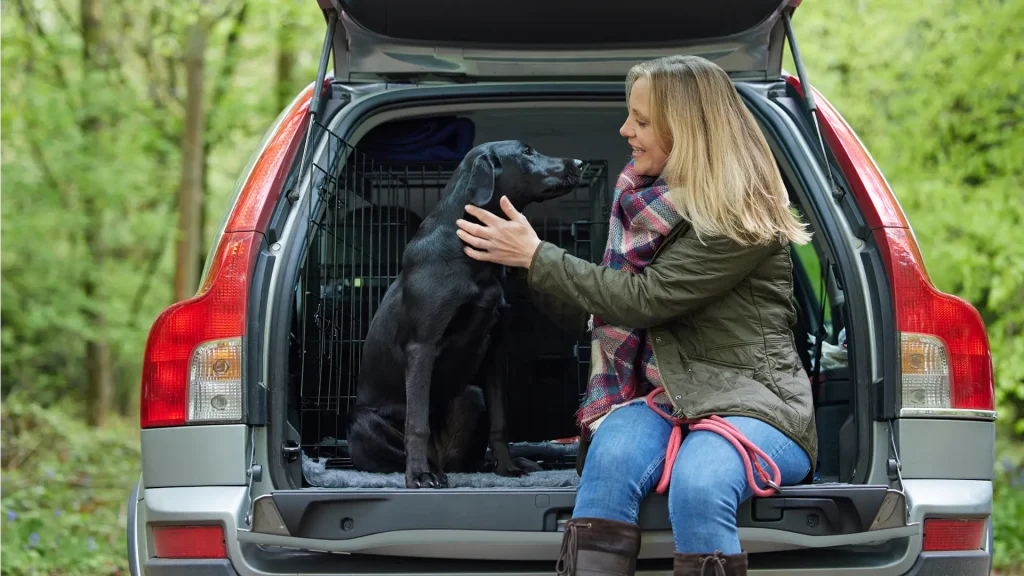
Once your dog is happily hopping into the car, it’s worth knowing what the law expects of you before the engine starts, and the answer is more nuanced than you might think. Strictly speaking, no law says a dog must wear a harness, but the Highway Code asks drivers to make sure dogs are suitably restrained so they cannot distract you or injure anyone if you have to stop quickly.
Ignoring that advice can count against you if a loose dog causes a problem, and it may affect an insurance claim, so it’s worth checking your policy. That matters on short school runs as much as on longer road trips with dogs, because a sudden stop affects every passenger in the car, furry ones included. Knowing your dog needs to be restrained naturally raises the practical question of which kind of restraint suits you both.
How to Secure a Dog in a Car: Harnesses, Guards and Crates
That question is exactly where most owners get stuck, because the best choice depends on your dog and your car. Probably one of the most useful dog car travel tips we can offer is to pick an option that fits properly and ensure you use it every single time:
- Harness: A well-fitted harness clips into the seat belt and keeps your dog on the back seat, which suits smaller and medium-sized dogs particularly well.
- Boot Guard: A sturdy guard separates the boot from the passengers, giving larger dogs room to settle while keeping them away from the driver.
- Crate: Good travel crate safety means choosing one that is secured in place and big enough for your dog to stand, turn and lie down comfortably.
A settled dog may also be less prone to dog motion sickness, which brings us neatly to how your dog might feel once the wheels start turning.
What to Do About Dog Motion Sickness
Some dogs simply feel queasy in a moving car, much like some of us do, and the signs are usually easy to spot once you know them. You’re dog might start drooling, licking its lips, become restless, or begin yawning more than usual. And, of course, if your dog is always sick in the car, that’s a pretty big giveaway.
If your dog is prone to travel sickness, travelling with a dog is much more comfortable when you pick a well-ventilated spot, keep the car cool and avoid a big meal in the hours before you set off. Facing forwards can help, and so can a steady, gentle driving style with smooth corners and gradual braking, which keeps everything calmer for your passenger.
Frequent breaks are a great help too, because fresh air and a short wander can settle a wobbly tummy. If the problem sticks around, have a chat with your vet, who can check for other causes and talk through safe options for your dog.
How Often Should You Stop on a Road Trip with a Dog?
Easing a queasy tummy is closely tied to how you pace the journey, which is why planning your breaks matters so much. A good rule of thumb is to stop roughly every two hours, giving your dog the chance to stretch, sniff, drink some water and have a toilet break in a safe spot away from busy roads. Regular stops are also good for you, too, as it’s not a good idea to remain in a seated position driving for long periods.
Longer road trips with dogs go more smoothly when you know where the stops are before you leave, so a quick look at services and parks along the route is time well spent. A short walk can work wonders for dog travel anxiety too, as a calm break helps your dog reset before the next stretch. And on a long day, consider an overnight stop at dog friendly accommodation so nobody ends up exhausted.
Once the route is mapped out, you can turn your attention to what goes into the boot.
Your Pet Travel Checklist and Packing Guide
A little preparation makes travelling with a dog feel far less like a military operation, and the simplest way to stay organised is a dog holiday packing list that you tick off in the days beforehand. Most owners find these essentials cover nearly every trip:
- Food and Treats
- Collapsible Water Bowl
- Lead, Collar and ID Tag
- Familiar Bed or Blanket
- Favourite Toys and Chews
- Poo Bags and Cleaning Wipes
- Towels for Muddy Paws
- Vet Details and Medication
It’s also worth phoning ahead if you’re booking pet friendly hotels in the UK, because many have rules on bedding, noise and where dogs may be left, and knowing them in advance avoids awkward surprises at reception. Of course, packing the car is only half of the story, since the trip really comes together when you reach a place that welcomes your whole family, four-legged members included.
Finding Dog Friendly Places to Stay with Pet Social
Finding that welcoming place is where a community of fellow owners really comes into its own, because the people who know your dog best often know where you’ll be made to feel at home. When you’re comparing dog friendly accommodation, look closely at extra charges, where dogs are allowed to sleep and whether there is a safe outdoor space nearby, since these details shape the whole stay.
Pet Social helps you find pet-friendly venues and local pet services through our Venue Finder, so you can plan walks, cafés and stops before you set off. Dog friendly staycations are a lovely way to build confidence, and travelling with a dog is more enjoyable once you’ve swapped tips with fellow owners, with community groups coming soon.
If you’d like to find out more, you can read our blog acts as a complete guide to pet-friendly days out in the UK.
Your Dog’s First Big Adventure Starts with a Good Plan
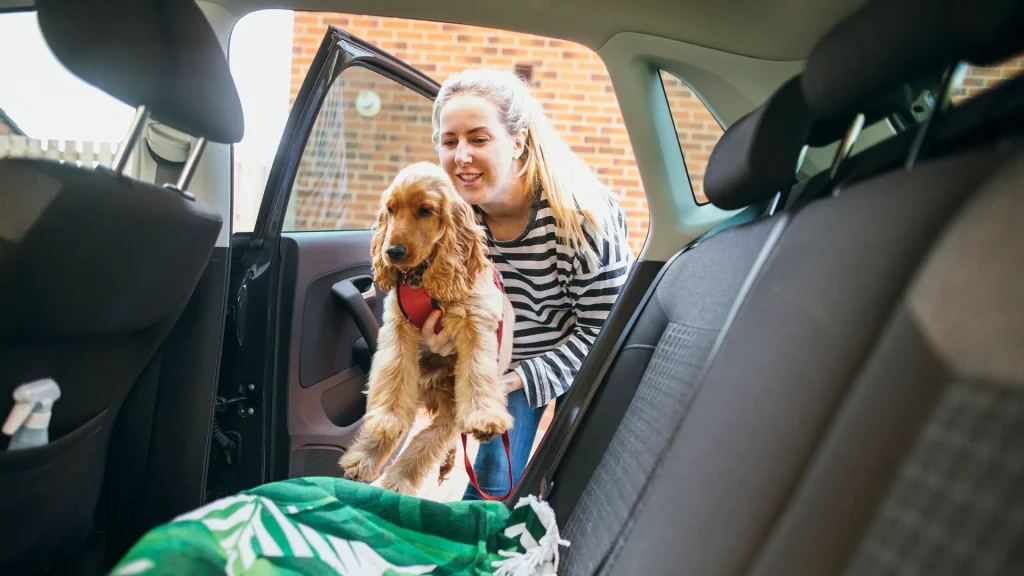
With patience in the car, safe restraint, regular breaks, a well-packed bag and a welcoming place to stay all sorted, your dog’s first big adventure is already well planned. To share your trip or find pet-friendly places, download the Pet Social app from the App Store or Google Play and join the pack. Got a question? Use our contact form and we’ll be happy to help.
Take your time, trust your preparation and enjoy every muddy, tail-wagging mile together.


